
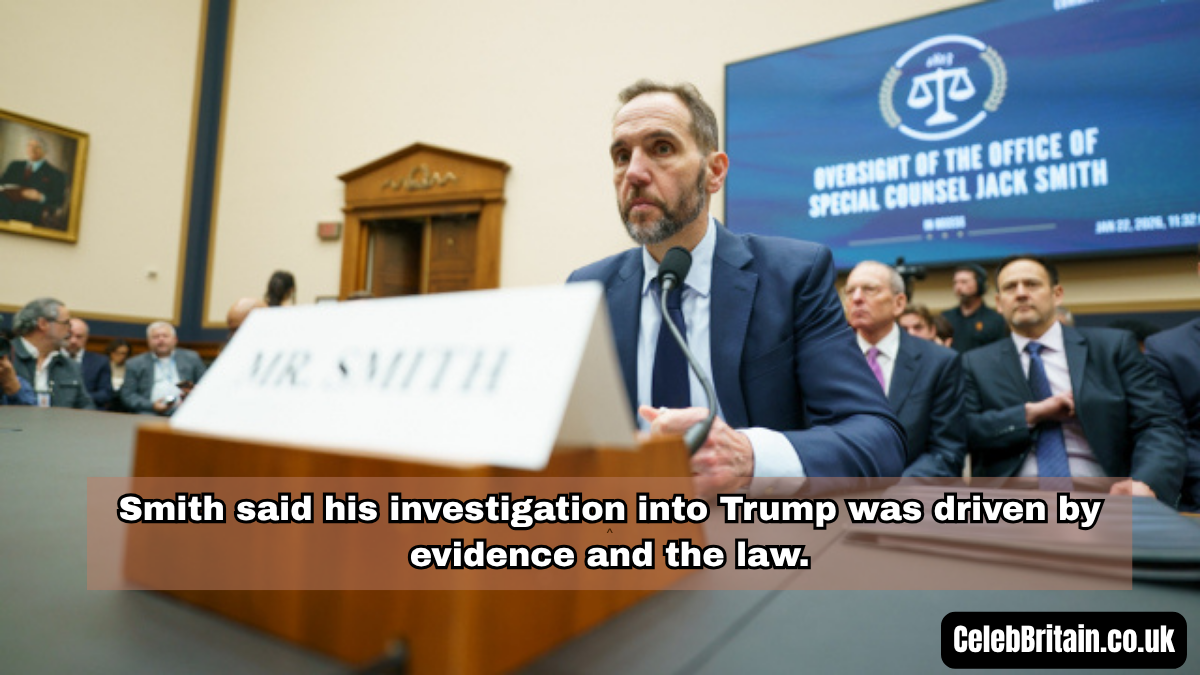
The Jack Smith testimony before Congress quickly became one of the most discussed political and legal events of the year, drawing attention from lawmakers, legal experts, and the public. At the center of the hearing was an examination of two high-profile federal investigations tied to former President Donald Trump, raising questions about prosecutorial independence, legal standards, and political influence.
Jack Smith served as the Special Counsel overseeing these sensitive cases, which placed him in a uniquely scrutinized position. His testimony was not just about defending decisions made during the investigations, but also about addressing broader concerns regarding fairness, evidence, and the role of the Department of Justice in politically sensitive cases.
This hearing attracted massive media coverage because it touched on fundamental issues in American democracy. Supporters viewed it as an important accountability moment, while critics saw it as politically charged oversight. As a result, the testimony became more than a legal proceeding—it turned into a national conversation about justice and politics.
Background of the Trump Investigation Cases
The investigations led by Jack Smith focused on two major federal cases involving former President Donald Trump. These cases included allegations related to election interference and the handling of classified documents, both of which carried serious legal implications under U.S. federal law.
The Department of Justice appointed Smith as Special Counsel to ensure independence from political pressure, a standard practice in sensitive investigations. His role was to evaluate evidence, determine whether charges were justified, and present findings through legal channels without external influence. This independence became a central theme during his testimony.
The timeline leading to the House hearing included months of legal filings, indictments, and court proceedings. As the cases progressed, political tension increased, leading lawmakers to request testimony to better understand how prosecutorial decisions were made. This set the stage for a highly scrutinized congressional appearance.
Key Moments From the House Judiciary Testimony
One of the most discussed aspects of the hearing was Jack Smith’s opening statement, where he emphasized that his decisions were based strictly on evidence and legal standards. He repeatedly stressed that political considerations did not influence prosecutorial actions, a point that became central to the entire testimony.
During questioning, lawmakers engaged in sharp and sometimes heated exchanges with Smith. Some members challenged the fairness of the investigations, while others focused on procedural integrity and evidence handling. These moments highlighted the deep political divide surrounding the case.
Several statements stood out to observers, particularly Smith’s insistence that prosecutorial independence is essential to the justice system. He also addressed concerns about transparency, explaining how investigative decisions are reviewed and supported by legal documentation. These key moments shaped public understanding of the hearing and quickly circulated across news outlets and social media platforms.
Political Reactions and Congressional Response
The political response to the testimony was sharply divided along party lines. Republican lawmakers largely questioned the legitimacy of the investigations, raising concerns about potential bias and the timing of charges. They used the hearing to press Smith on whether political pressure influenced prosecutorial decisions.
Democratic members of Congress, on the other hand, defended the integrity of the Justice Department’s actions. They emphasized the importance of maintaining independence in federal investigations and argued that the testimony reinforced standard legal procedures rather than undermining them.
Outside Congress, public reaction was equally polarized. Supporters of the investigation viewed the testimony as a necessary clarification of legal processes, while critics saw it as evidence of political targeting. Media outlets amplified these divisions, contributing to a broader national debate.
Legal Implications of the Testimony
The Jack Smith testimony also raised important legal questions about the scope and limits of prosecutorial authority. One of the key issues discussed was how evidence is evaluated in politically sensitive cases and whether additional safeguards are needed to ensure fairness.
Legal experts noted that testimony of this nature can influence ongoing and future proceedings, even if indirectly. While congressional hearings do not alter legal outcomes directly, they can shape public perception and potentially affect judicial scrutiny or defense strategies.
Another major implication was the discussion around transparency in special counsel investigations. Smith’s explanations of legal procedures highlighted how decisions are documented and reviewed, reinforcing the idea that prosecutorial actions are subject to structured oversight rather than political direction.
Media Coverage and Public Opinion
Media coverage of the hearing was extensive, with major outlets providing live updates, analysis, and breakdowns of key moments. News organizations highlighted different aspects depending on editorial perspective, ranging from legal analysis to political implications.
Social media platforms played a significant role in amplifying selected clips from the testimony. Short video excerpts, particularly from heated exchanges, went viral and shaped public perception of the hearing. This fragmented consumption of information contributed to varying interpretations of the same events.
Public opinion remained deeply divided. Some viewers saw the testimony as a confirmation of lawful investigative processes, while others believed it raised further questions about fairness and political influence. This split reflects the broader polarization surrounding high-profile legal cases in the United States.
Timeline of Events Leading to the Hearing
The appointment of Jack Smith as Special Counsel marked the beginning of a series of major legal developments. Once appointed, Smith’s office began investigating multiple federal matters involving Donald Trump, which quickly became central to national political discourse.
Over time, the investigations led to indictments and court filings that attracted widespread attention. Each development added pressure for congressional oversight, eventually resulting in the decision to call Smith for testimony before the House Judiciary Committee.
The hearing itself was scheduled after months of preparation, reflecting the complexity and sensitivity of the subject matter. Lawmakers sought clarity on prosecutorial decision-making, evidence handling, and the broader implications of the investigations.
Analysis of Key Legal Arguments
Throughout the testimony, Smith emphasized that prosecutorial decisions were based on evidence and legal thresholds rather than external influence. This argument formed the backbone of his defense and was repeated in response to multiple lines of questioning.
Opposing viewpoints raised concerns about selective prosecution and timing, suggesting that political context may have influenced perception of the cases. However, Smith maintained that all decisions were grounded in established legal standards and reviewed through appropriate channels.
Legal analysts noted that the hearing highlighted the tension between law and politics in high-profile cases. While the justice system is designed to operate independently, public perception often complicates that separation, especially in cases involving political figures.
Impact on U.S. Politics and Future Elections
The testimony is likely to have lasting effects on political discourse in the United States. In the short term, it intensified debates about the justice system, prosecutorial independence, and political accountability.
Looking ahead, the Jack Smith testimony could influence how future investigations involving political figures are perceived by the public. It may also shape campaign narratives, particularly as legal proceedings continue to intersect with election cycles.
More broadly, the hearing underscores the increasing polarization of legal issues in American politics. As investigations involving high-profile figures become more common, the relationship between law enforcement institutions and public trust will remain a central issue.
Conclusion
The Jack Smith congressional testimony represented a significant moment in the ongoing intersection of law and politics in the United States. It brought national attention to complex legal processes and highlighted the challenges of maintaining independence in politically sensitive investigations.
While opinions remain divided, the hearing provided important insights into how federal investigations are conducted and reviewed. It also reinforced the ongoing debate about transparency, accountability, and fairness in the justice system.
Ultimately, the testimony will likely be remembered not just for its content, but for its broader impact on public trust and political discourse in the years ahead.
Frequently Asked Questions
What was the Jack Smith testimony about?
It focused on congressional questioning regarding federal investigations led by Jack Smith into Donald Trump-related cases.
Why did Jack Smith testify before Congress?
He testified as part of congressional oversight to explain prosecutorial decisions and investigative procedures.
What were the key moments in the testimony?
Key moments included his defense of evidence-based decisions and heated questioning by lawmakers.
Did the testimony affect ongoing legal cases?
While it did not directly change legal proceedings, it influenced public perception and political discussion.
Why is the testimony considered important?
It highlighted issues of prosecutorial independence, political influence, and transparency in federal investigations.